Museum of the Bible
Ref: Museum of the Bible (2026). Washington DC.
___________________________________________________________________________
Terminology
Anno Domini (AD): “In the year of our lord”; created by Dionysius Exiguus, Christian monk, circa 525 to mark the number of years since the conception of Jesus.
Fatimids: A Shi’ite dynasty that traces their lineage to the prophet Muhammad through his daughter Fatima. They claimed that they, not the Sunni Abbasid caliphate in Baghdad, were the rightful rulers of the Islamic community.
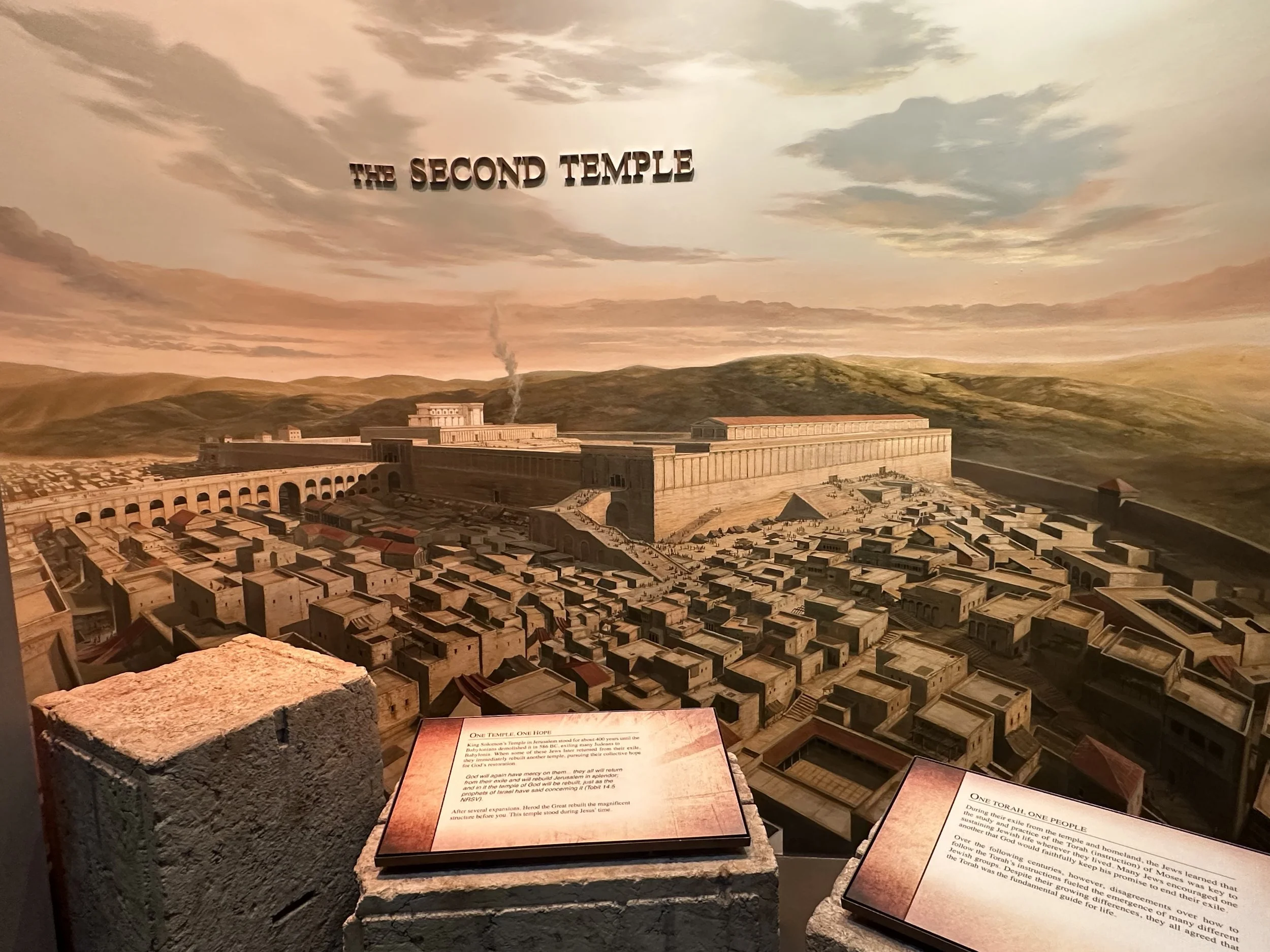
King Solomon’s Temple (the First Temple): Built in Jerusalem and stood for ~400 years until it was demolished by Babylonian forces in 586 BCE.
Mamluk (‘Owned One’- Arabic): People bought by the Ayyubid rulers of Egypt to serve in the military. They eventually converted to Islam and usurped power, establishing their own kingdom, which included Egypt, Syria, Palestine, and Yemen. They restored the Dome of the Rock and al-Aqsa mosque, both on Jerusalem’s Haram al-Sharif (‘the Noble Sanctuary’, ‘Temple Mount’). They were overthrown by the Turkish Ottomans.
___________________________________________________________________________
Misc Quotes
“The United State Constitution does not mention the Bible and specifically prohibits a religious test for federal office. During ratification, many objected to these omissions. But one Constitutional delegate explained: “the sole purpose and effect of it is to exclude persecution and to secure to you the important rights of religious liberty.”
“The Turkish Ottoman dynasty emerges in Asia Minor. In less than a century, the Ottoman dynasty extends its territory from Iran, westward across N. Africa, south to Yemen, and north to the gates of Vienna. By 1516, the Sultan Selim I had conquered most of the Middle East.”
___________________________________________________________________________

Chronology
14 May, 1948: The state of Israel declares Independence. This action followed the conclusion of the British Mandate of Palestine, established by the League of Nations in 1922, over an area ruled by the Ottomans until the end of WWI (Museum of the Bible).
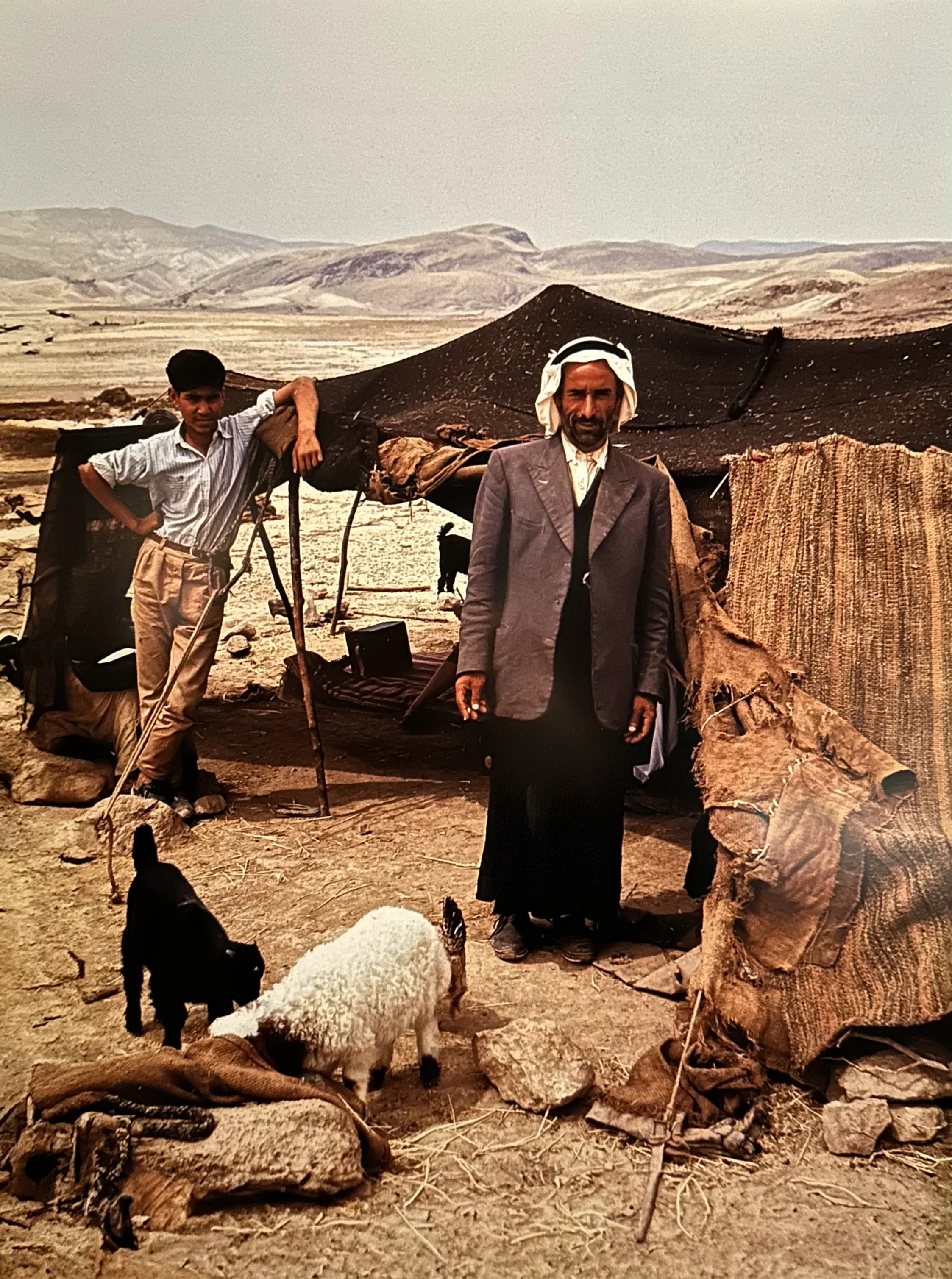
Jan-Feb, 1947: Dead Sea Scrolls; Muhammed edh-Dhib Hassan and at least two other Bedouin, discover the first cave and scrolls while shepherding near the Dead Sea (Museum of the Bible).
"I was tending a flock of 55 in the wilderness. I came upon a cave with its entrance open at the top. Every time I threw a stone in, I would hear breaking pottery. In the cave I found pottery jars. I began to break the jars with my staff, thinking I would find treasure. In the first nine jars, I found little seeds of reddish color, and nothing else. When I broke the 10th jar, I found some rolled leather with scrawling on it. I kept the leather with me until I returned to our house. An uncle of mine asked to show it to a dealer in Bethlehem, to see if it might be of any value” -Muhammed edh-Dhib Hassan.
1938: Kristallnacht ‘the Night of Broken Glass’; Joseph Goebbels, Germany’s Minister of Propaganda, calls for a pogrom against Jews in Germany and Austria. On Kristallnacht, mobs of Nazis and Hitler Youth storm through Jewish neighborhoods, smashing the windows of Jewish homes, looting shops and businesses, and destroying > 250 synagogues. Thousands of Jews are arrested and sent to prison camps; hundreds are killed in the riots or, later, in prison. Driven by anti-semitic ideologies, the rampage sought to destroy Judaism as a religion (Museum of the Bible).
1859: Charles Darwin publishes “On the Origin of Species” detailing his theory of evolution, based on the concept of Natural Selection (Museum of the Bible).
1859: Florence Nightingale publishes her book on nursing, the first of its kind in England, and a year later in the USA. In the book, she emphasizes the importance of hygiene, healthy habits, and preventative care. “God had made disease to be…a reparative process.” The nurses mission is to assist that process (Museum of the Bible).
1854-1856: The Crimean War; Florence Nightingale (‘the lady with the lamp’) supervises and trains nurses to care for the sick and wounded Later, she establishes the world’s first professional nursing school in London (Museum of the Bible).
1851-1852: Harriet Beecher Stowe publishes “Uncle Tom’s Cabin.” Read by millions of Americans, it revealed the cruelties suffered by enslaved Africans at the hands of their owners. The book quickly becomes a best seller, second only to the bible and intensified the US debate over slavery (Museum of the Bible).
1848: The Women’s rights movement in the USA begins in earnest following the Seneca Falls Convention (Museum of the Bible).
1831: William Lloyd Garrison begins publishing the Liberator, calling for immediate freedom for enslaved African Americans (Museum of the Bible).
1791: The USC ratifies the 1st Amendment to the US Constitution; “Congress shall make no law respecting an establishment of religion, or prohibiting the free exercise thereof.” When the amendment was first ratified, it applied only to the federal government. States could pass their own laws concerning religious practice (Museum of the Bible).
1787: The USC passes the Northwest Ordinance which provides a plan for how the new territories would be governed and incorporated into the Union (Museum of the Bible).
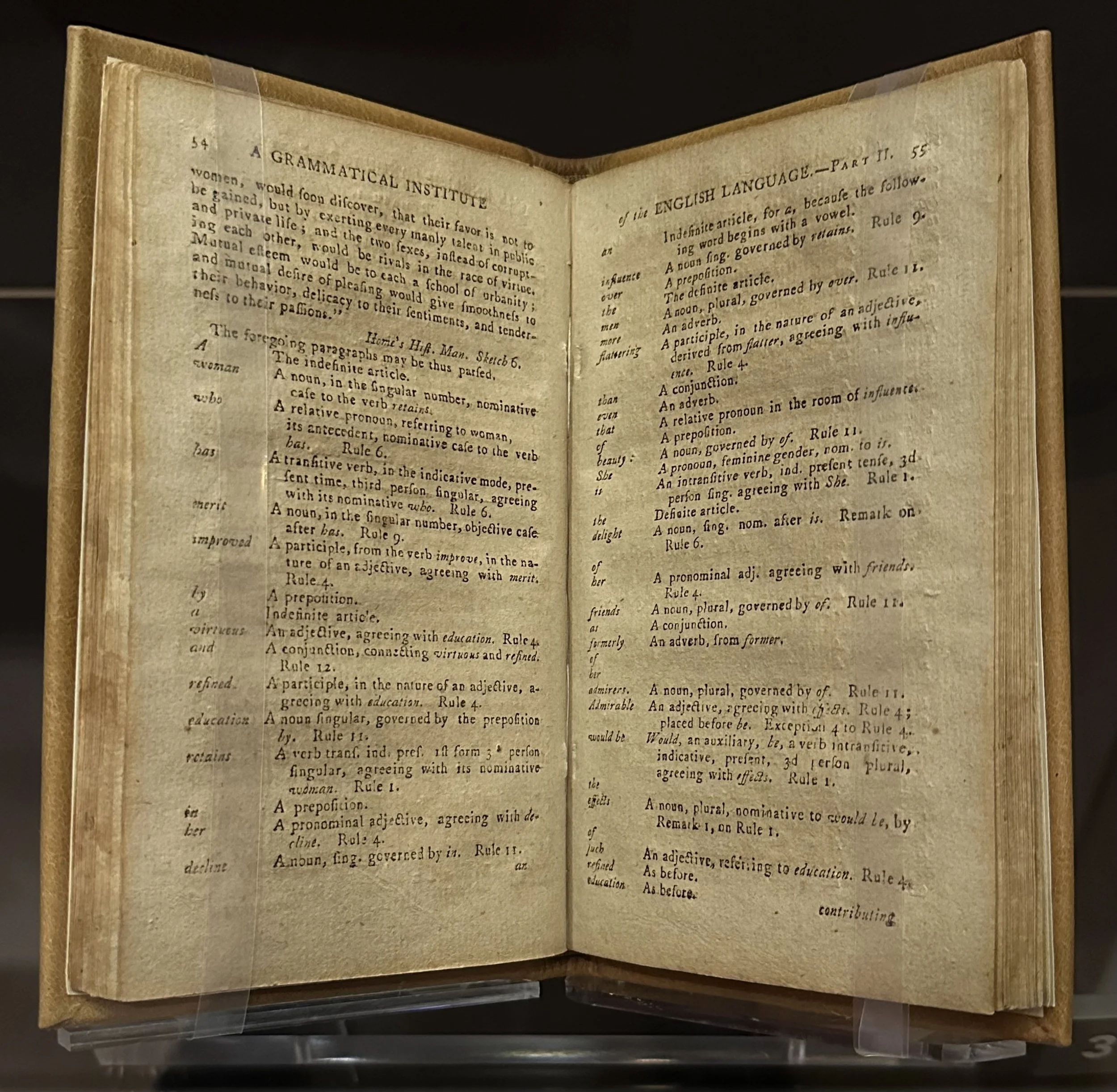
1785: Noah Webster publishes “A Grammatical Institute of the English Language.” Webster wanted to replace British textbooks that were in use at the time. His spellers, dictionaries, and readers codified “American English” for generations of school children (Museum of the Bible).
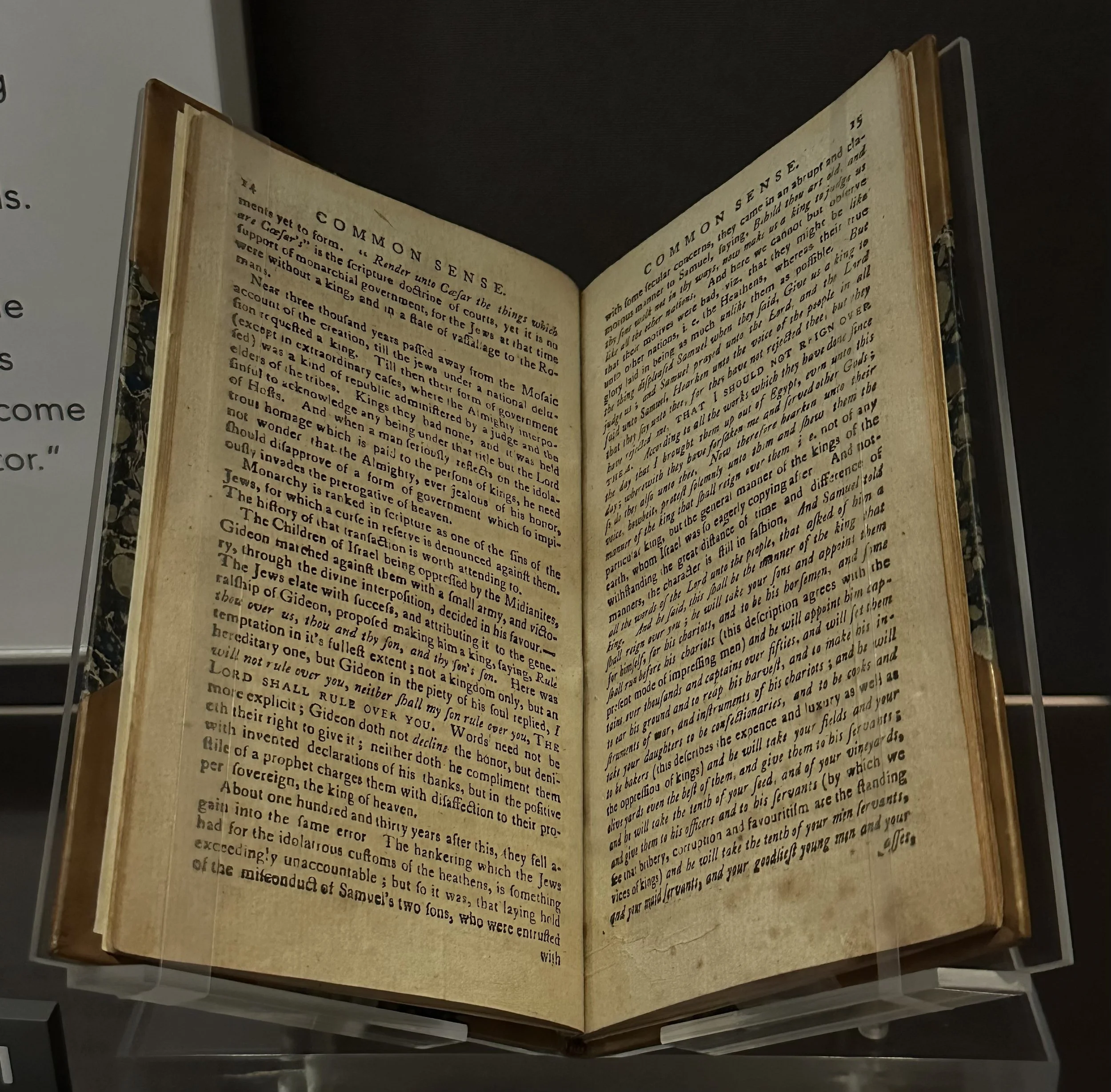
1776: Thomas Pain publishes “Common Sense”, one of the most effective political pamphlets ever written (Museum of the Bible).
1740s: The “Great Awakening”; a wave of religious fervor grips the American colonies. Its most popular leader was George Whitefield, an Anglican Priest (Museum of the Bible).
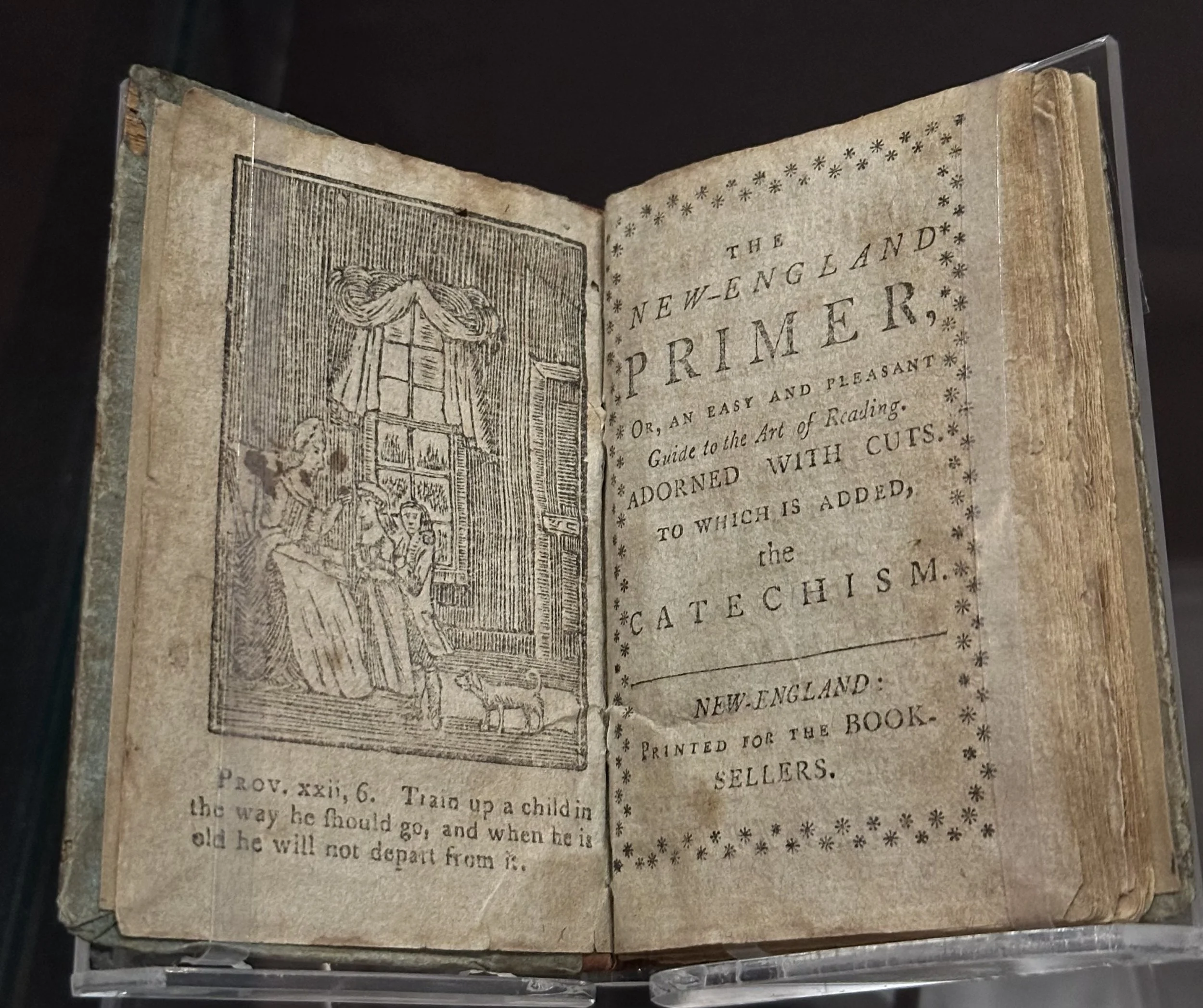
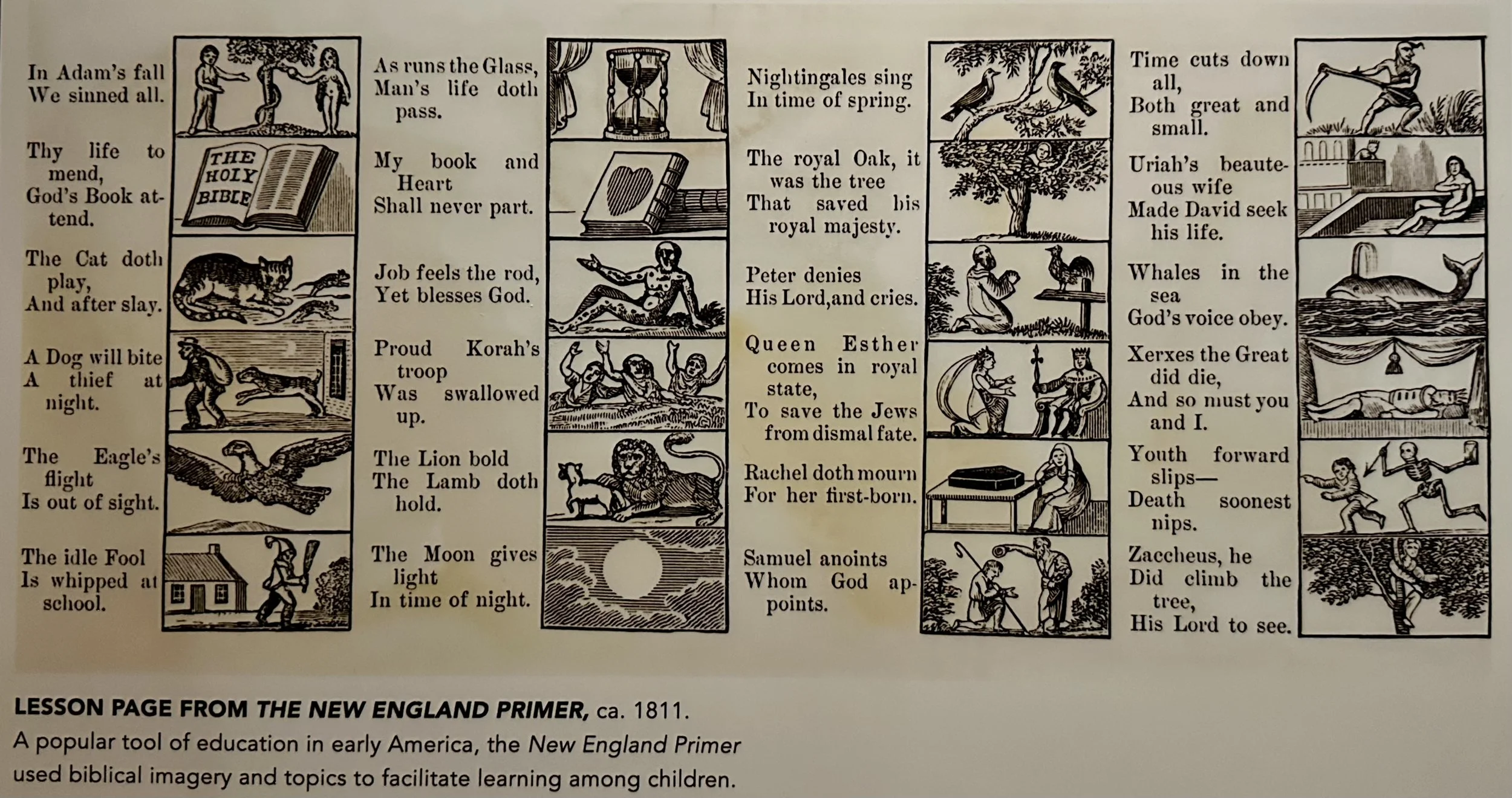
1688: The New England Primer is first published as a widely used textbook which included selections from the King James Bible, along with religious maxims and moral lessons (Museum of the Bible).
1681: William Penn founds Pennsylvania as a Quaker colony and opens it to all Protestant Christians. An early advocate of tolerance, he wrote “The Great Cast of Liberty of Conscience,” asserting that religious persecution is “repugnant to the…Precepts of the Scriptures” (Museum of the Bible).
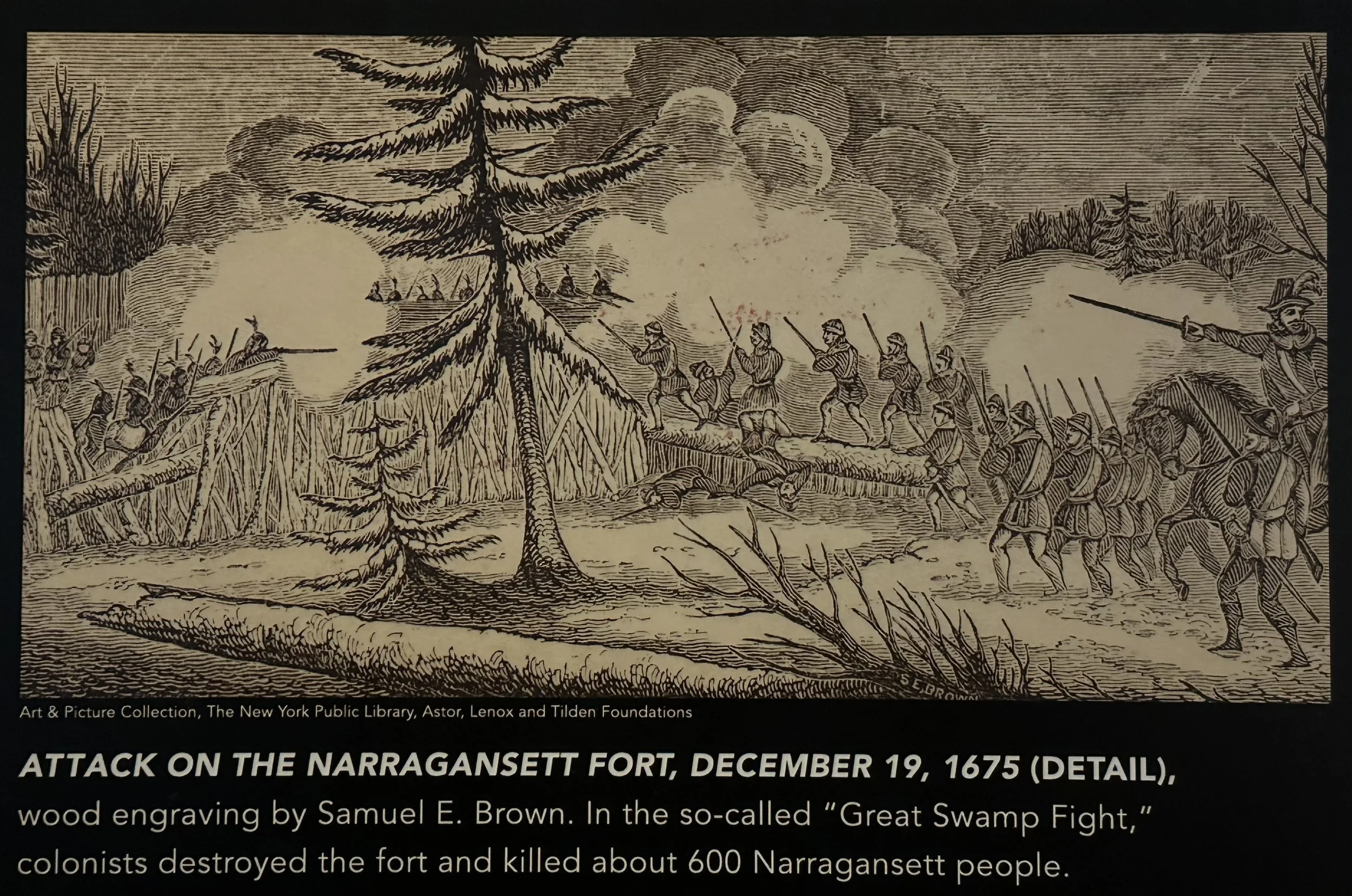
1675: King Phillips (‘Metacom’s War’); named for the Wampanoag chief, the war is fought between colonists and natives. It was one of New England’s most devastating wars. Tensions had been simmering for a long time over the settler’s encroachment on Native lands and attempts to convert Natives to Christianity. Eventually, many new England tribes joined the hostilities, both for and against the English. In the end, the Wampanoag and their allies suffered a crushing defeat: 5000 Natives were killed and many hundreds more were sold into slavery. More than 2500 colonists died and 25 of their towns were burned to the ground (Museum of the Bible).
19 Dec, 1675: The Great Swamp Fight; colonists destroy a Narragansett fort and kill ~600 Narragansett people (Museum of the Bible).
1654: Jewish settlers in New Amsterdam establish Shearith Israel, the oldest Jewish congregation in North America. Its founders had escaped the Portuguese inquisition in Brazil and fled to New Amsterdam (modern NYC). Though Governor Peter Stuyvesant tried to deport them, they won permission to stay (Museum of the Bible).
1646: Ottoman Sultan Mehmet IV legalizes tobacco use across the Ottoman empire (Museum of the Bible).
1640: The first edition of the Bay Psalm book is produced as the first book printed in English in the Americas. It is considered one of the most historic volumes in American religious history. A committee of 30 men, including John Cotton, Richard Mather, and John Eliot, translated the 150 psalms into English from the original Hebrew (Museum of the Bible).
1636: Massachusetts Bay Colony banishes Roger Williams for challenging its biblical interpretations. Williams flees to Narragansett territory, where chiefs grant him land-use rights. Soon after, he founds Rhode Island, with religious freedom for all (Museum of the Bible).
1636: Harvard opens its doors as the first colonial college with the stated purpose: “to advance learning, and perpetuate it to posterity; dreading to leave an illiterate ministry to the churches, when our present ministers shall lie in the dust.” Harvard offered a robust curriculum in classical language, theology, science, law, and other subjects (Museum of the Bible).
1634: Maryland is founded by the Catholic Calvert family (George and Cecil) as a refuge for Catholics, who were still a persecuted minority in England. It was one of the first colonies to grant a degree of religious liberty. But Protestants soon overthrew Maryland’s Catholics and established the Anglican Church. Catholics lost many of their rights, including the right to worship publicly (Museum of the Bible).
1620: The Pilgrims; a small group of Puritans travel from Holland to a “new world,” where they could keep their English identity, establish more favorable working conditions, and live according to their own beliefs. Upon their arrival in Plymouth Bay (Massachusetts) aboard the Mayflower, the Men of the expedition draft the Mayflower Compact (Museum of the Bible).
1611: The King James Bible is completed. Commissioned by King James I of England shortly after his coronation as a replacement to the Bishop’s Bible, it aimed at giving the English people a standard authoritative English translation with interpretive commentary, similar to the Geneva bible (Museum of the Bible).
1565: Spanish troops destroy the Huguenots’ Fort Caroline (modern Florida), and kill most of its Huguenot inhabitants. The French later avenge the attack (Museum of the Bible).
1565: Spain founds St. Augustine, North America’s first Spanish settlement, in present-day Florida (Museum of the Bible).
1563: William Tyndale is executed for heresy after translating the Bible into English (Museum of the Bible).
1560: English Protestants living in exile publish the English-language Geneva Bible, one of the most popular bibles of its time. It was the bible of choice in New England until the King James Bible became more widely available (Museum of the Bible).
1555: John Rogers, under the pseudonym ‘Thomas Matthew’, is martyred after compiling a complete English-language Bible based on the translations of William Tyndale. Rogers was safe from persecution during the Protestant reign of Henry VIII. But when Queen Mary restored Catholicism to England, he was executed for heresy (Museum of the Bible).
Mid 16c: The Ottoman empire conquers Yemen and its coffee plantations. Coffee becomes one of the most valuable commodities that was part of the trade routes in the Empire and Europe (Museum of the Bible).
1539: The first English Bible is authorized in England during the reign of Henry VIII (Museum of the Bible).
1538: Ottoman Sultan Suleiman the Magnificent builds the walls that to this day surround the Old City of Jerusalem (Museum of the Bible).
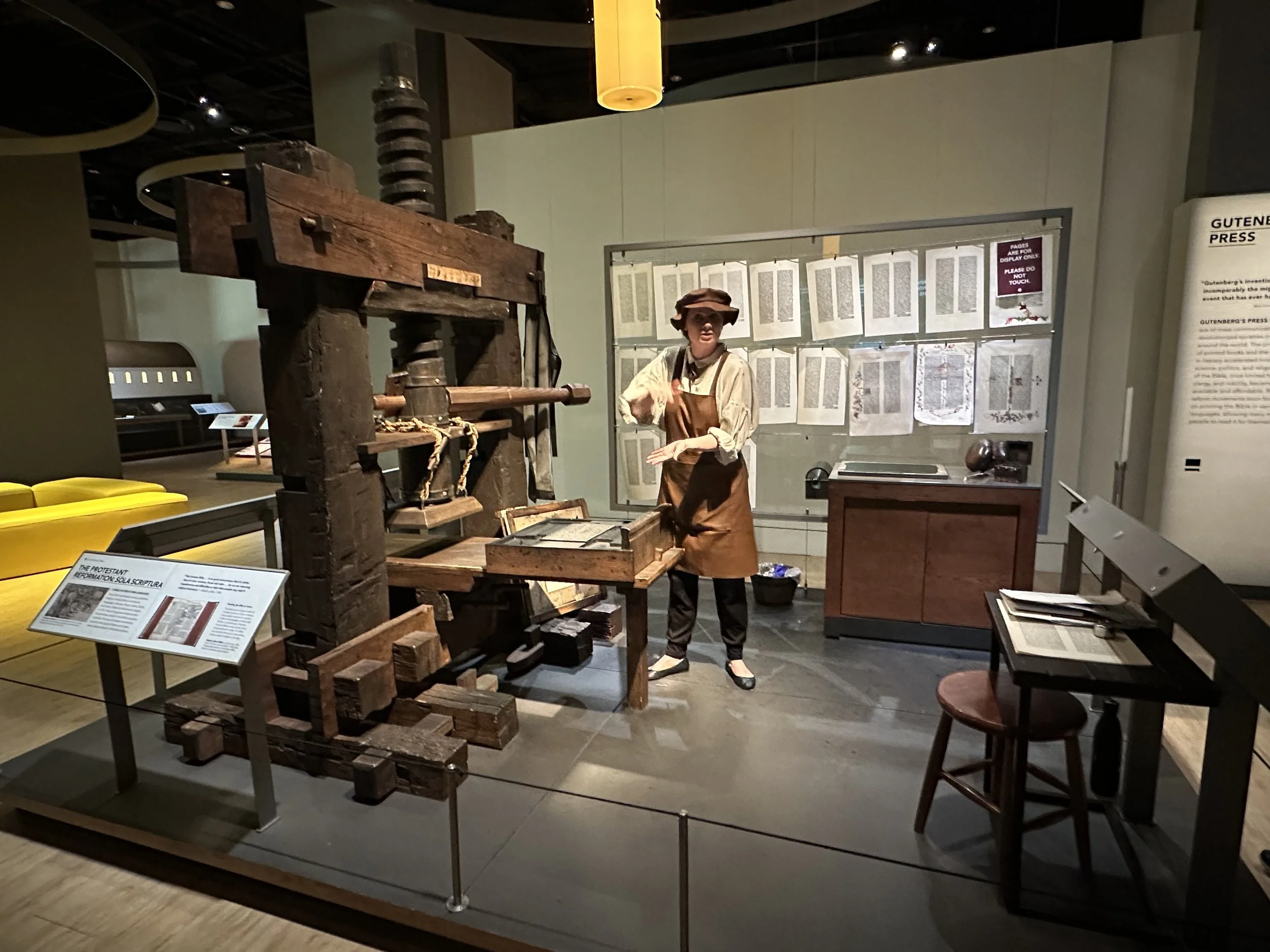
1490s: Printing is a thriving business in many European cities with books being printed in both Latin, the language of the scholars, and in the vernacular languages spoken by the general public (Museum of the Bible).
Late 1400s: The Spanish Inquisition; the Spanish execute thousands of Conversos- those who had converted from Judaism to Christianity but adhered to Jewish practices in secret (Museum of the Bible).
1291: End of the Crusades; the Mamluk conquest of Acre results in a collapse of the Crusaders strongholds and the end of the Crusades (Museum of the Bible).
1250-1517: Mamluk period; the Mamluks (people bought by the Ayyubid rulers of Egypt to serve in the military that later converted to Islam), usurp power, establishing their own kingdom, which includes Egypt, Syria, Palestine, and Yemen. They restored the Dome of the Rock and al-Aqsa mosque, both on Jerusalem’s Haram al-Sharif (‘the Noble Sanctuary’, ‘Temple Mount’). They are later overthrown by the Turkish Ottomans (Museum of the Bible).
1187: Saladin, the first Ayyubid Sultan of Egypt and Syria, re-captures Jerusalem (Museum of the Bible).
1096-1099: The First Crusade (Museum of the Bible).
15 Jul, 1099: Crusaders capture Jerusalem and establish the Kingdom of Jerusalem. At its peak in the mid-12c, this kingdom encompassed large parts of present-day Israel, Jordan, and Lebanon (Museum of the Bible).
1095: The Council of Clermont; Roman Catholic Pope Urban II calls for a crusade to liberate holy sites in Jerusalem (Museum of the Bible).
969: The Fatimids, a Shi’ite dynasty that traces their lineage to the prophet Muhammad through his daughter Fatima, conquer Egypt and build the capital al-Qahira (Cairo- ‘the Victorious’). By 970, the Fatimids had also seized and controlled large parts of Syria, present-day Israel, and Arabia. However, Fatimid control in Palestine was hampered by constant conflict with local Bedouin tribes. The Fatimid period ended with the conquest of Jerusalem by the Crusaders, who founded the kingdom of Jerusalem in 1099 (Museum of the Bible).
715: Umayyad governor Sulayman founds a new capital city, Ramla, which later flourishes as a commercial hub under Abbasid rule (post-750). The Abbasids focus on maintaining Jerusalem’s holy sites. While cities like Tiberias and Caesarea thrived on agriculture and trade. Jerusalem remained primarily a pilgrimage destination, drawing faithful from across the expanding Islamic world (Museum of the Bible).
661-750: The Umayyad dynasty ushers in a golden age of construction, revitalizing roads, minting Arabic-inscribed coins, and erecting iconic structures like the Dome of the Rock and al-Aqsa mosque on the Temple Mount (Museum of the Bible).
651: St Landry, the bishop of Paris, establishes the Hôtel-Dieu in Paris, one of the oldest continuously operating hospitals in the world today (Museum of the Bible).
638: Umar ibn al Khattab captures Jerusalem, marking the regions entry into the Islamic era (Museum of the Bible).
525: Christian Monk Dionysius Exiguus invents “Anno Donini (AD, “in the year of our lord”) to count the years since the conception of Jesus. Previously, Roman historians had used the founding of Rome as the start of their calendar (Museum of the Bible).
390: The Byzantines redraw their borders and name the region “Palestina”, dividing it into three administrative entities (dioceses) (Museum of the Bible).
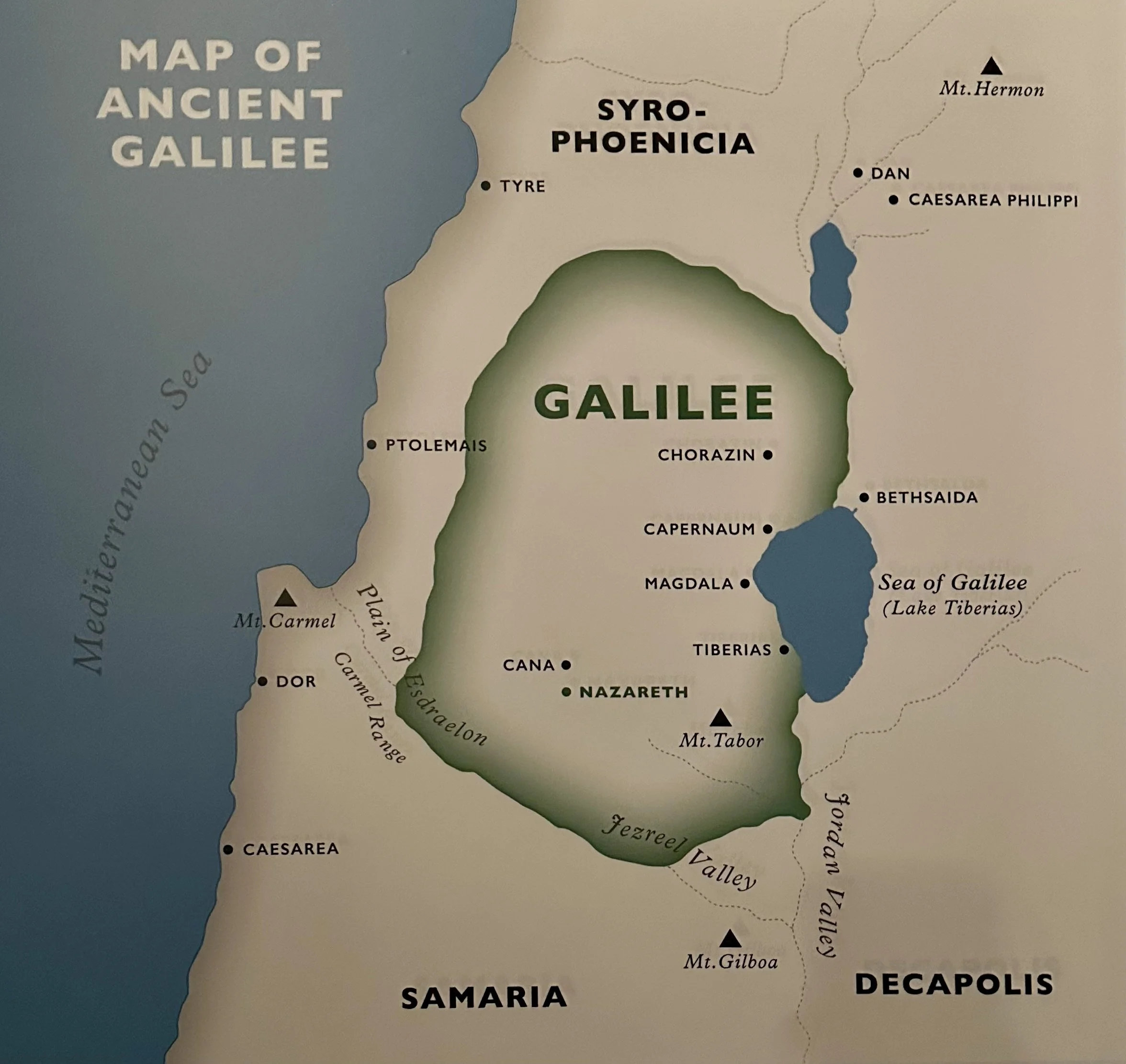
324-638: The Byzantine Empire; at the beginning of the 4c, the Roman Emperor Constantine the Great (307-337) adopts Christianity and founds the Byzantine Empire. By the end of the 4c, the region of Israel had become predominantly Christian. Churches were built in Jerusalem, Bethlehem, and Galilee, and monasteries were established in many parts of the country (Museum of the Bible).
136: Following two failed Jewish revolts (70 and 132-136), the region of Judaea is re-named Syria Palestina. Jerusalem became Aelia Capitolina, with Jews forbidden entry (Museum of the Bible).
66-74: The Jewish Revolt; Jews under Roman rule revolt against the Roman empire. The Romans kill many Jews, destroy the temple in Jerusalem, and drive many Jews from the region. Judea became a Roman province (Museum of the Bible).
73-74: Fall of Masada (‘the fortress’); the Roman 10th legion led by Flavius Silva march against Masada. They construct a rampart of thousands of tons of stone and move a battering ram up the ramp to breach the fortress wall (Museum of the Bible).
70: Siege of Jerusalem; Roman legions led by Vespasian and Titus crush Jewish resistance and raze the sacred Temple. Thousands perish, face exile, or are enslaved with Judea in ruins (Museum of the Bible).
6: Judea comes under direct Roman rule (Museum of the Bible).
37 BCE: Herod the Great becomes the Roman-appointed King of Judaea. Herod rebuilds the Temple Mount (Museum of the Bible).
63 BCE-324: The Roman Empire rules Israel; following Pompey’s successful eastern campaign, the Hasmonean Kingdom of Israel become a Roman client state (Museum of the Bible).
142-63 BCE: The Hasmoneans (Maccabees), a Judean family, enjoy a century of independence after revolting against the Seleucid King Antiochus IV (Museum of the Bible).
168-167 BCE: Seleucid forces led by King Antiochus IV Epiphanes conquer Judea and impose Hellenistic ways on the Jews, outlawing their traditional practices. He desecrated the Temple (167 BCE) and sparked a full scale revolt led by the Hasmoneans, a priestly family also known as the Maccabees (Museum of the Bible).
334 BCE: Macedonian forces led by Alexander the Great conquer the Persian Empire. In his wake, Greek practices, values, and the Greek language spread throughout the Near East (Museum of the Bible).
515 BCE: The Jewish people rebuild their temple in Jerusalem, the second, on the site of Solomon’s shrine (Museum of the Bible).
539 BCE: Persian forced led by King Cyrus the Great capture Babylon. Cyrus returns captured peoples to their homelands and restores their gods to their temples (Museum of the Bible).
586 BCE: Babylonian forces destroy Jerusalem and King Solomon’s Temple and exile many Judeans to Babylonia (Museum of the Bible).
597 BCE: Babylonian forces led by King Nebuchadnezzar II invades Judah, loot the temple and palace in Jerusalem, and deport King Jeconiah and thousands of prominent citizens (Museum of the Bible).
612 BCE: The Babylonian Empire led by Nebuchadnezzar eclipses the Assyrian Empire (Museum of the Bible).
701 BCE: Judean King Hezekiah’s Revolt; Assyrian forces led by King Sennacherib conduct a brutal siege of the Judahite town of Lachish (Museum of the Bible).
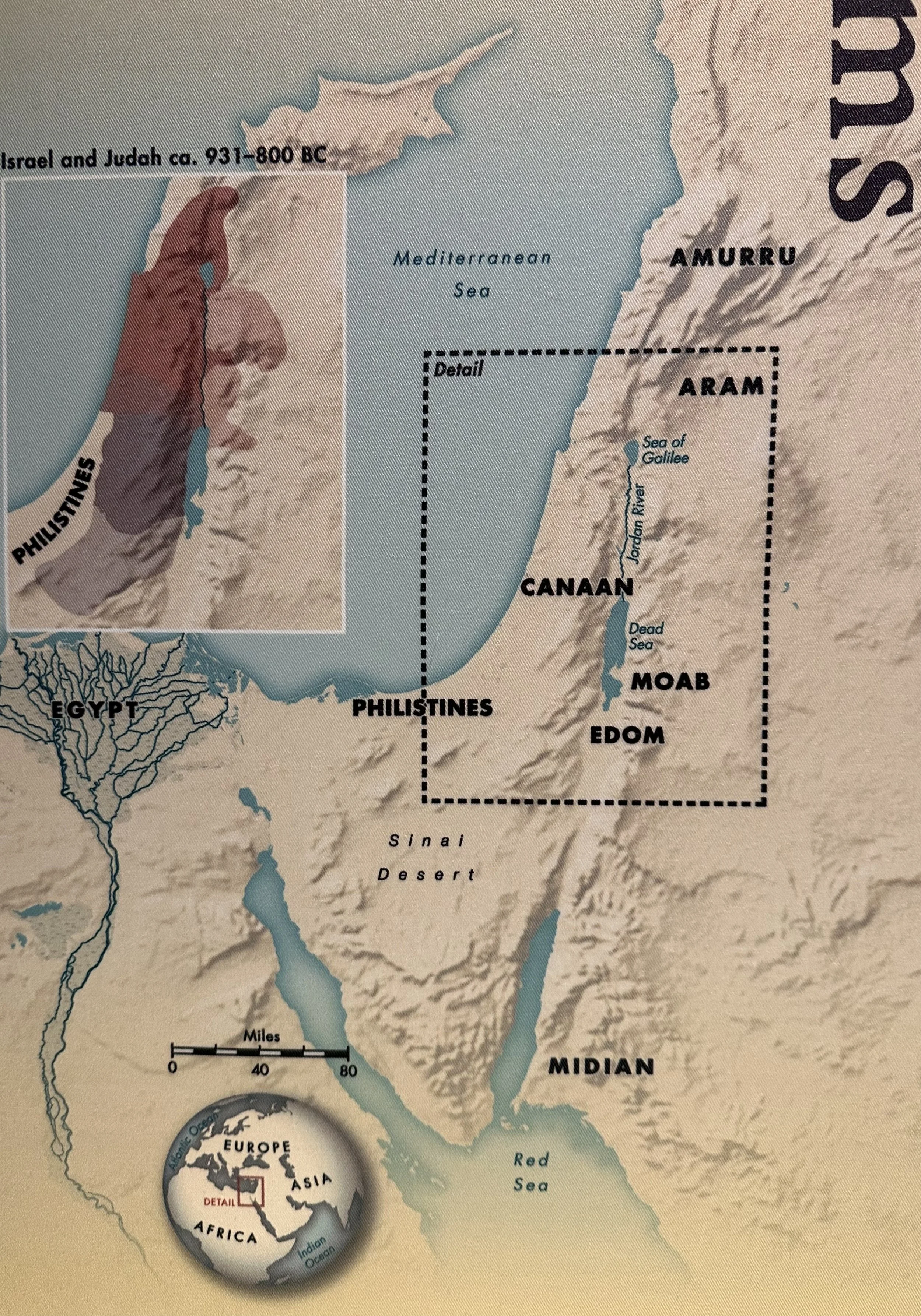
931 BCE: The territories of Canaan are divided into two kingdoms with different- Israel in the North and Judah in the South (Museum of the Bible).
Late 1200s BCE: Egyptian Pharaoh Merneptah commissions a massive monument listing his conquests. The final lines focus on Canaan and boasts poetically that Merneptah defeated several cities and wiped out the people “Israel” (Museum of the Bible).
The Israelites also celebrated victories with poetry. The “Song of the Sea” in Exodus is the Bible’s oldest account of conflict with Egypt. It concludes with a description of triumph over rivals in Canaan (Museum of the Bible).
___________________________________________________________________________